Walk along Oudezijds Voorburgwal, a few minutes from Amsterdam’s Centraal Station, and you could pass the Our Lord in the Attic museum without a second glance. That’s the point. Behind an ordinary 17th-century canal house facade, the upper floors hide a full Catholic church, built when public Catholic worship was restricted in the Dutch Republic.
Why a church in an attic?
After the Reformation, Amsterdam’s Protestant authorities banned open Catholic services. In practice the rule was bent. Catholics could worship if they kept it out of sight, so wealthy merchants converted the upper floors of private houses into “schuilkerken”, or hidden churches. This one, known in Dutch as Ons’ Lieve Heer op Solder, spans the top storeys of several connected buildings and once held a congregation of a couple of hundred people.
It stopped serving as a clandestine church in 1887 and opened as a museum in 1888, which makes it one of the oldest museums in Amsterdam, second only to the Rijksmuseum according to most accounts.
What you’ll see inside
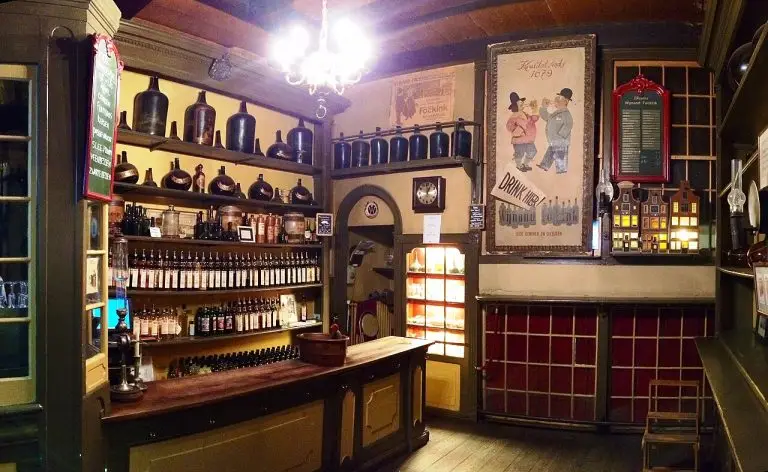
- The canal house rooms: Period living spaces, including a kitchen and a sitting room, show how a wealthy merchant family lived.
- The narrow stairs: They’re steep and winding, a reminder this was a house first and a church second.
- The church itself: A tall, galleried hall with an altarpiece and an organ, surprisingly large for something tucked under a roof.
- The priest’s quarters: A tiny sleeping space and a confessional.
- Art and silver: Paintings, liturgical objects and objects explaining how the Catholic community kept its faith going.
The museum also includes a newer connected building across the street with exhibitions and a cafe, linked by a passage, so you can finish your visit with a coffee.
Practical details
The museum listing on museum.nl gives Thursday to Tuesday, 10:00 to 18:00, which suggests it closes on Wednesdays. Older guides show different times, and some mention a closure on King’s Day, so check the official museum website for current hours and ticket prices before you go. Booking a timed ticket online usually saves queueing in busy months.
The staircases are steep and narrow. If you’ve got reduced mobility, contact the museum in advance to ask about access options rather than assuming.
Q&A before you go
How long does it take?
Plan on one to two hours with the audio guide. It’s a smaller place than the big museums, so it fits well between other sights.
Is it good with kids?
Older children who like secrets and old houses tend to enjoy it. Very young kids may find the stairs tiring and the quiet atmosphere restricting.
Where is it?
It sits in the Red Light District area, though in daytime the immediate street is a normal canal-side stretch. The nearby Oude Kerk is a handy pairing, and the area is a short walk from Nieuwmarkt.
When is it quietest?
Weekday mornings right at opening, and the last hour or two before closing, are usually calmer than lunchtime.
Is it worth your Amsterdam time?
Tips for a better visit
Wear flat shoes, because the stairs and uneven floors are part of the experience. Keep bags small, as the rooms are narrow and the staff may ask you to leave large items at the cloakroom. Take your time in the church room and look up at the ceiling and the gallery, since that’s where you’ll notice how large it feels compared with the street outside. The museum audio guide explains the household objects and the congregation’s story, and it’s worth using. After your Our Lord in the Attic museum visit, walk five minutes to the Oude Kerk, then continue along the canal to Nieuwmarkt for lunch.
If you’re travelling with a city card, check whether it includes entry here, because inclusion rules change. Photography rules can also vary in sensitive rooms, so look for signs or ask staff. A quiet visit, with time to read the labels and sit for a moment in the church, is far better than a rushed one.
If you’re tired of queueing at the big names, the Our Lord in the Attic museum gives you a story you can’t get elsewhere: religion, tolerance and a very Dutch compromise, all in one building. It also gives a real look at a 17th-century canal house interior. For a longer background read, see Our Lord in the Attic on Wikipedia.