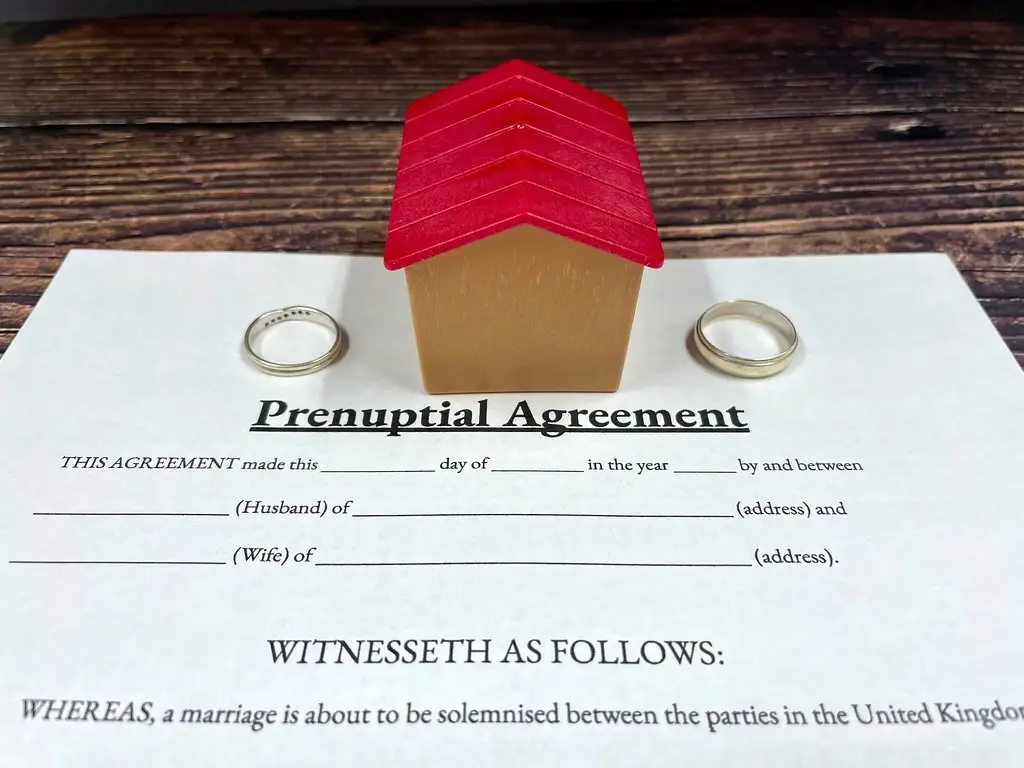
A lot of couples assume that prenuptial agreements are only for celebrities and business owners. People searching for a minimum networth to discuss about prenup are usually trying to figure out whether their own situation is “big enough” to justify an awkward conversation. The honest answer is that there is no legal minimum at all.
What a prenup actually does
A prenuptial agreement is a written contract signed before marriage. It sets out how property, debts and sometimes support payments will be handled if the marriage ends or one spouse dies. Without one, state law decides, and the default rules vary widely: some states treat nearly everything acquired during marriage as shared, while others divide property by what a court considers fair.
Why there is no minimum networth to discuss about prenup
Courts do not require couples to hit a wealth level before signing a prenup, and lawyers do not refuse clients because they have too little. What matters is whether you have something worth protecting or a situation that default law handles poorly. A person with $20,000 of student debt and a small business idea may benefit from a prenup more than someone with a plain salary and no debts.
Situations where a prenup is worth considering
You own a business
Without an agreement, a divorce can raise questions about how much of the business belongs to the other spouse. A prenup can keep ownership clear.
One partner has significant debt
Some states allow debts incurred before or during the marriage to become a shared issue. An agreement can state that each person remains responsible for their own pre-marital debts.
Children from a previous relationship
Prenups can help protect inheritances for children, which matters if you want certain assets to pass to them.
Expected inheritance or family property
If you anticipate receiving family land, a home or a share in a family firm, an agreement can keep it separate.
Large gaps in income or assets
If one partner earns or owns far more, both people may want certainty about what happens next.
What a prenup cannot do
- It generally cannot decide child custody or child support in advance.
- It cannot include illegal terms or be signed under pressure and still be safe.
- It may be set aside if one party hid major assets or did not have time and information to review it.
How to bring it up without a fight
Raise the topic early, well before the wedding, and frame it as a way of being clear rather than a sign of mistrust. Many couples find it helpful to list assets and debts together first. Our guide on how to calculate your networth can give each person a clear starting number.
Practical steps
- Each partner lists assets, debts and income.
- Each hires their own lawyer, since one lawyer cannot properly represent both.
- Exchange full financial disclosures.
- Allow plenty of time before the wedding to review and negotiate.
- Keep copies and revisit the agreement after major life changes.
Costs and timing to expect
A basic prenup drafted by a family lawyer often costs from a few thousand dollars per person, and more if there are businesses, trusts or properties in several states. Complex agreements for high-asset couples can cost considerably more. Courts tend to look closely at whether the agreement was signed too close to the wedding, so aim to finish at least a month or two ahead. Updating the document after major changes, such as a new business, a move abroad or the birth of children, is also wise. Many couples keep a postnuptial agreement in mind as an option if circumstances shift later.
A balanced view
If you are wondering about a minimum networth to discuss about prenup, the better question is whether you and your partner would benefit from clarity. The cost of a prenup is typically a fraction of the cost of a contested divorce. For wealthier readers, our page on high net worth tax planning touches on related planning topics.
This article is general information and not legal advice. Prenup rules differ by state and country, so speak to a qualified family lawyer.
Featured image: Prenup Agreement – Household Assets by advokatsmart.no, BY 2.0, via Wikimedia Commons.