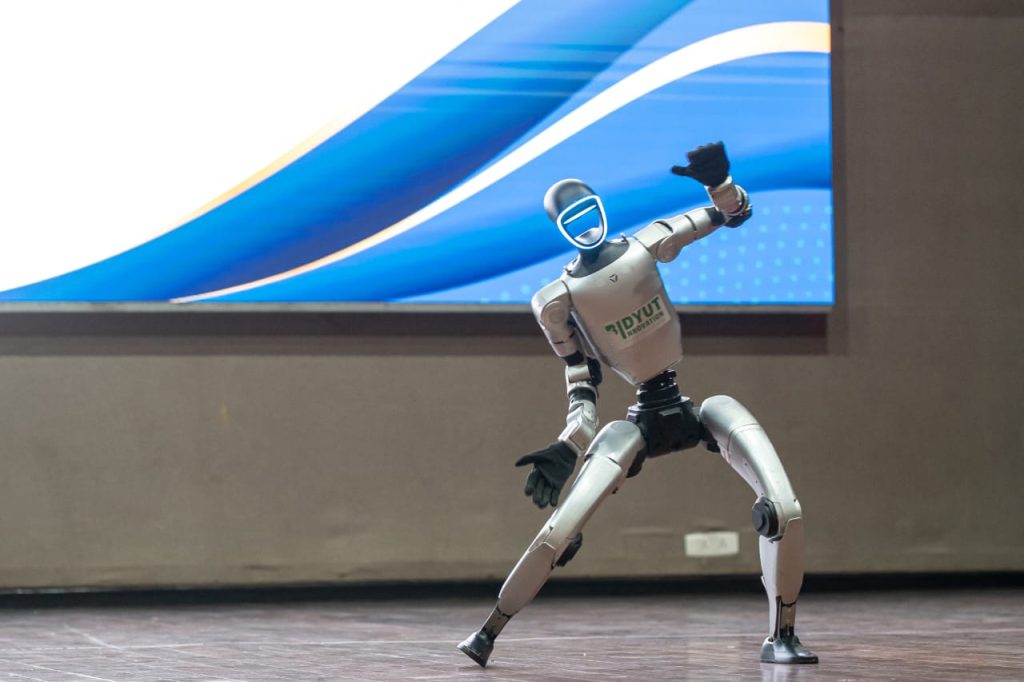
Humanoid robots have been a science fiction staple for decades. Now large technology companies are putting serious money into making them real. The reasons are a mix of practicality and ambition, and the obstacles are bigger than the demos suggest.
Why the human shape?
The world is built for people. Stairs, door handles, tools and shelves are all sized for human bodies. A robot with arms, hands and legs can in principle use the same spaces and equipment without redesigning everything. That flexibility is the central argument.
Specialized machines are usually more efficient at one task. A humanoid aims to be a general-purpose helper that can do many jobs, from moving boxes to loading a dishwasher.
What changed
Two developments helped. First, AI models have become better at understanding images and language, which gives robots more flexible perception and the ability to follow instructions. Second, hardware got cheaper and more capable: better batteries, motors and sensors.
Researchers also use simulation to train movements, letting robots practice in virtual environments millions of times before trying them for real.
What is still hard
Hands are a big challenge. Human hands have many joints and sensitive touch, and replicating that reliably is difficult. Balance and walking on uneven ground require fast control. Battery life limits how long a robot can work. Safety is crucial, because a heavy machine moving around people can cause injury if it fails.
Cost is another problem. Prototypes are expensive, and companies must reach a price where businesses see a clear return.
Reliability matters most in practice. A robot that works in a demo video may struggle with the daily variety of a real warehouse.
Where they might appear first
Industrial settings are likely first, such as warehouses and factories where tasks are repetitive and spaces are controlled. Moving containers, sorting items and feeding machines are common targets.
Homes are much harder, because every house is different and expectations for safety and privacy are higher. Most experts expect household helpers to arrive much later.
What it means for work
Automation raises natural concerns about jobs. Historically, machines have taken over some tasks while creating new roles, but the transition can be hard for affected workers. Many companies say humanoids are meant for dull, dangerous or physically strenuous jobs that are difficult to staff. How that plays out will depend on pace, policy and training.
How to judge announcements
Be cautious about slick videos. Ask whether a demo was remote-controlled, sped up or heavily rehearsed. Look for evidence of robots working for long periods in real customer sites, with measurable results.
Also consider the supply chain. Building thousands of robots requires manufacturing capacity and parts that are not yet widely available.
Why Big Tech is willing to wait
Large companies can afford long-term bets. If general-purpose robots work, the market could be huge, and AI expertise gives these firms an edge in making them useful. Even if humanoids take longer than hoped, research tends to produce benefits for other products, from sensors to software.
Final thought
Humanoid robots are a long project. Expect gradual progress rather than a sudden revolution, and expect the first useful ones to be working quietly in warehouses long before they appear in your living room.