Imagine a headband with a pair of fuzzy cat ears that perk up when you concentrate and droop when you relax. It sounds like a gag, and in part it is. But it also stands for a real branch of consumer electronics: consumer brainwave gadgets that read faint electrical signals from the head and turn them into something visible, audible or playable. The cat ears are a funny entry point to a serious question, which is how much a cheap sensor can really tell about your mind.
What the sensor is measuring
Neurons communicate with tiny electrical impulses. When millions of them fire together, the combined signal is strong enough to detect on the surface of the scalp. This is electroencephalography, or EEG. Doctors and researchers have used it for about a century to study sleep, seizures and attention.
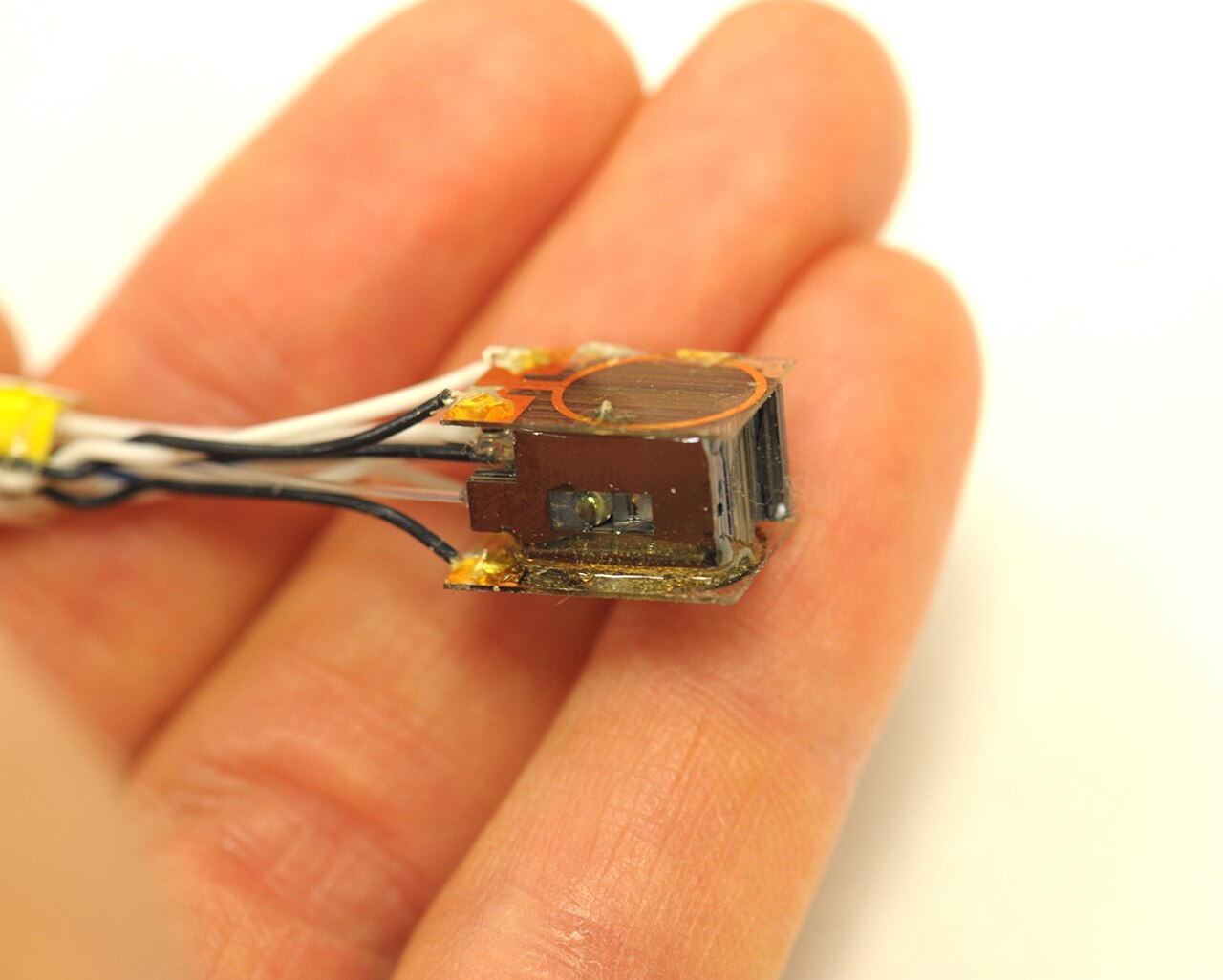
The signals are very small, measured in millionths of a volt. They are also messy. The skull and skin blur them, and muscle movements, eye blinks and nearby electronics add noise. Medical systems use many electrodes, conductive gel and shielded rooms. A consumer device might use one dry contact on the forehead and one reference clip on an ear. That’s a big step down in signal quality, and consumer brainwave gadgets live with it.
From waves to a score
EEG activity is often grouped into frequency bands, commonly named with Greek letters. Slower rhythms tend to be associated with drowsiness and relaxation, and faster ones with alertness and mental effort. A consumer chip analyzes the strength of these bands and runs them through an algorithm that outputs a number, such as an attention score or a meditation score.
Then comes the fun part for consumer brainwave gadgets. The number drives a motor, a light or a game. High attention might raise the ears, and a calm state might lower them. Others control toy helicopters, move a ball on a screen, or give feedback during meditation.
What consumer brainwave gadgets can and can’t do
- They can detect broad changes, such as closing your eyes and relaxing versus staring at a task
- They can respond to muscle tension and eye movement, which sometimes creates the illusion of reading your mind
- They can’t read specific thoughts, words, images or intentions
- They can’t reliably diagnose any condition
The last two points are worth underlining. When a headset appears to respond to a thought, it’s usually reacting to something cruder: a clenched jaw, a raised eyebrow or a change in breathing. Many users train themselves, without realizing it, to produce the physical cues that move the device.
Attention and relaxation are not simple physical quantities. Different people produce different patterns, and the same person varies by day. A score labeled attention is the maker’s guess based on a statistical model, not a direct reading of the mental state. That’s fine for a toy, but it limits what claims you should believe. Be cautious with products that promise to boost focus, cure anxiety or improve intelligence, and look for independent research instead of marketing language.
The real uses of consumer brainwave gadgets
Consumer brainwave gadgets aren’t only novelty. Some people use it for biofeedback, where seeing a signal respond to your state helps you learn to relax or hold attention. Educators and hobbyists use inexpensive headsets to teach the basics of neuroscience. Developers experiment with hands-free controls, which could matter for people with limited mobility, though serious assistive systems rely on better sensors.
Research-grade work, such as brain-computer interfaces that let someone control a cursor, uses far more sophisticated equipment and often implanted sensors. The gap between a toy headband and that technology is large.
If you are tempted to buy one, a few checks save disappointment. Look at how the headset connects, since some need a phone app that may collect your data. Check whether the maker explains how the score is calculated, even in broad terms. Read independent reviews from people who tried it for weeks, not just launch coverage. And think about comfort: a dry sensor pressed against the forehead for an hour can get annoying, and poor contact makes readings worse.
It also pays to run your own small test. Sit still with eyes open, then close them for a minute, and watch whether the reading changes. Then clench your jaw. If the number jumps more from the jaw than from relaxing, you have learned how much muscle noise the device picks up. Experiments like this make consumer brainwave gadgets a decent introduction to signals and noise. Novelty tech is a broad field, from plush robot toys that teach kids to anti-paparazzi clothing, and the same skepticism applies to all of it.
Privacy deserves a thought
Brain data feels intimate, and even coarse signals can reveal patterns about alertness, stress or sleep. If a headset sends data to an app or cloud service, read the policy. Find out what is stored, who can see it, and whether it can be deleted. As consumer brainwave gadgets get better, data about the brain may call for stronger protections than most data gets now.
A pair of reactive cat ears is a delightful bit of engineering theater, and it opens a window into how signals from the head can be captured and used. Just keep your expectations calibrated. The device is listening to a faint electrical hum, translating it with a rough model, and displaying the result. That’s a clever trick, not telepathy.
Image: Holdmydherka / Wikimedia Commons, CC BY-SA 3.0.