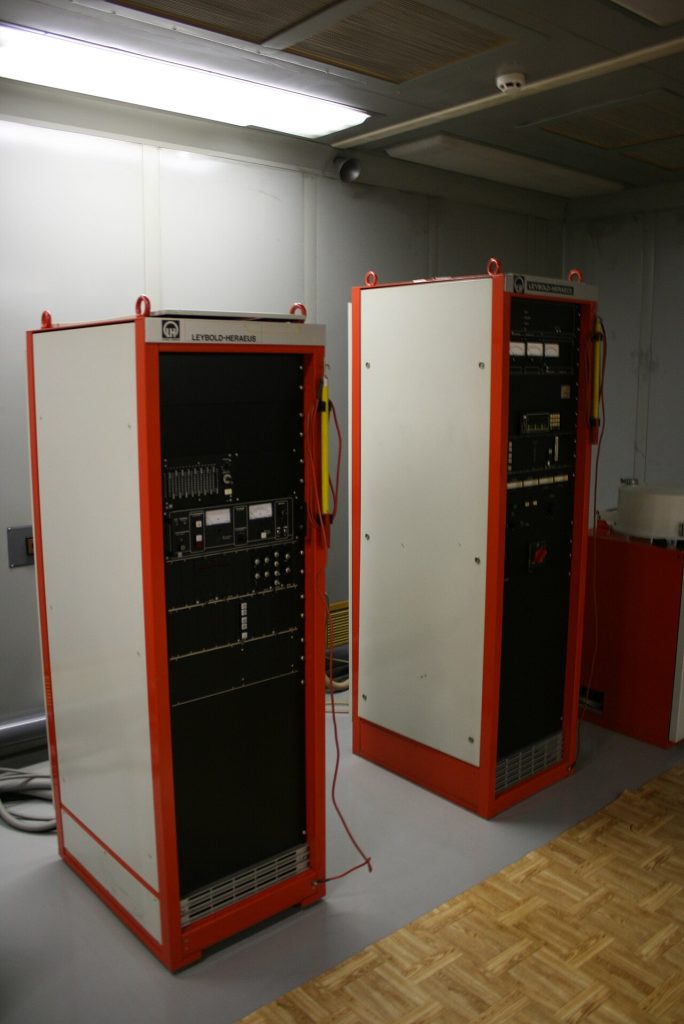
Few people think about the machines that make the chips inside their phones. Yet chipmaking equipment has become one of the most politically sensitive categories of technology in the world. Governments debate where it can be sold, companies design products around the rules, and entire industries watch for changes. It is worth understanding why a factory tool earned that status, without getting lost in any single dispute.
How a chip is made, briefly
A modern processor starts as a thin disc of purified silicon called a wafer. Over weeks, the wafer passes through hundreds of steps in a cleanroom, a space filtered to be far cleaner than a hospital operating theatre. A speck of dust that would be invisible on a table could ruin a circuit.

The process repeatedly adds thin layers of material, prints patterns onto them, etches away what is not needed and cleans the surface. Then it starts again with the next layer. By the end, a single wafer carries many identical chips, each containing billions of tiny switches called transistors.
Every one of those steps needs specialised chipmaking equipment. There are machines that deposit layers, machines that etch, machines that inspect and machines that test. A modern factory is a long chain of chipmaking equipment, and each link must perform to extraordinary precision.
What lithography does
The printing step is called lithography, and it is the most famous part of the story. A beam of light shines through a patterned plate onto the wafer, which is coated with a light-sensitive material. The pattern is shrunk and focused so that it forms circuits far smaller than a human hair.
Smaller features mean more transistors in the same area, which generally means faster and more efficient chips. That is why the industry has spent decades finding ways to print finer and finer details. The most advanced lithography machines are among the most complex tools ever built for manufacturing, combining precision optics, vacuum systems, moving stages and software, and they are produced by only a very small number of companies.
That concentration of chipmaking equipment makers matters. When only a handful of firms can make a critical type of machine, whoever controls access to them has considerable influence over the whole industry.
Why governments care about chipmaking equipment
Chips are in nearly everything: phones, cars, medical devices, power grids, cloud servers and military systems. A country without access to modern chips can find its economy and security exposed. A country with strong chip production gains both commercial strength and strategic weight.
Governments therefore treat the ability to make advanced chips as a matter of national interest. Some have offered subsidies to encourage factories to be built at home. Others have restricted the export of the most advanced chipmaking equipment, in order to slow the development of capabilities they view as a security concern.
Whatever one thinks of the policies, the logic is straightforward. Because chipmaking equipment is rare, difficult to replicate and necessary for advanced production, controlling them is one of the few practical ways to influence who can build leading chips.
How export controls work
An export control is a legal requirement to obtain permission before selling certain goods, software or technical knowledge to certain destinations or buyers. In practice, a company that makes chipmaking equipment must check each sale against a list of rules.
- Is the machine, part or software covered by the control list?
- Is the buyer or destination restricted?
- Will the equipment be used for a prohibited purpose?
- Is a licence required, and has it been granted?
The rules can cover whole machines, spare parts, servicing and sometimes even the transfer of technical drawings. Since chipmaking equipment needs constant maintenance, restrictions on repair support can matter as much as limits on selling new machines.
Companies that sell chipmaking equipment spend a great deal on compliance. They train staff, screen customers and monitor changes in the rules, which can arrive with little warning. Penalties for violations can be severe.
The enforcement challenge, the trade-offs and what it means for buyers
Enforcement is hard. Chipmaking equipment passes through many hands, parts can be shipped separately, and some components have ordinary uses elsewhere. Agencies and companies have to guess at intent, and rules must be updated as technology changes. Critics also note that a restriction can push a country to develop its own alternatives faster, which may eventually reduce the influence of the original controls.
There are trade-offs on every side. Restrictions on chipmaking equipment can protect security interests, but they can also hurt suppliers who lose customers, raise costs across the supply chain and invite retaliation. Allies must coordinate or the controls leak. Businesses face uncertainty when rules shift, making long-term investment more difficult.
For ordinary buyers, the effects are mostly indirect. They show up in the supply and price of devices, in where products are made and in how stable supply is during shocks. A phone or a car that depends on a global chain of specialised factories is exposed to policy changes far upstream. When chip supply was disrupted in recent years, shoppers saw how a few missing components could delay products they use every day.
The takeaway is that chipmaking equipment is no longer a niche topic for engineers. It sits at the crossroads of technology, trade and security. You do not need to follow every regulation to appreciate the larger point: the most powerful levers in the modern economy are sometimes machines most of us will never see.
For a neutral background reference, the Wikipedia article on Photolithography is a useful place to start.
Specialised hardware is not only a story about big tools. For the design side of the same industry, read about building modular chips from smaller pieces and why chips built for a single job are in demand.