Every few months another headline announces that an artificial intelligence company has raised a huge round of money, often described in billions. To outsiders it can look like a bubble or a vanity contest. There is a more mundane explanation. Why AI labs need so much funding is mostly a story about computing power, and once you see where the money goes, the numbers make more sense, even if they remain risky.

Training is the big bill
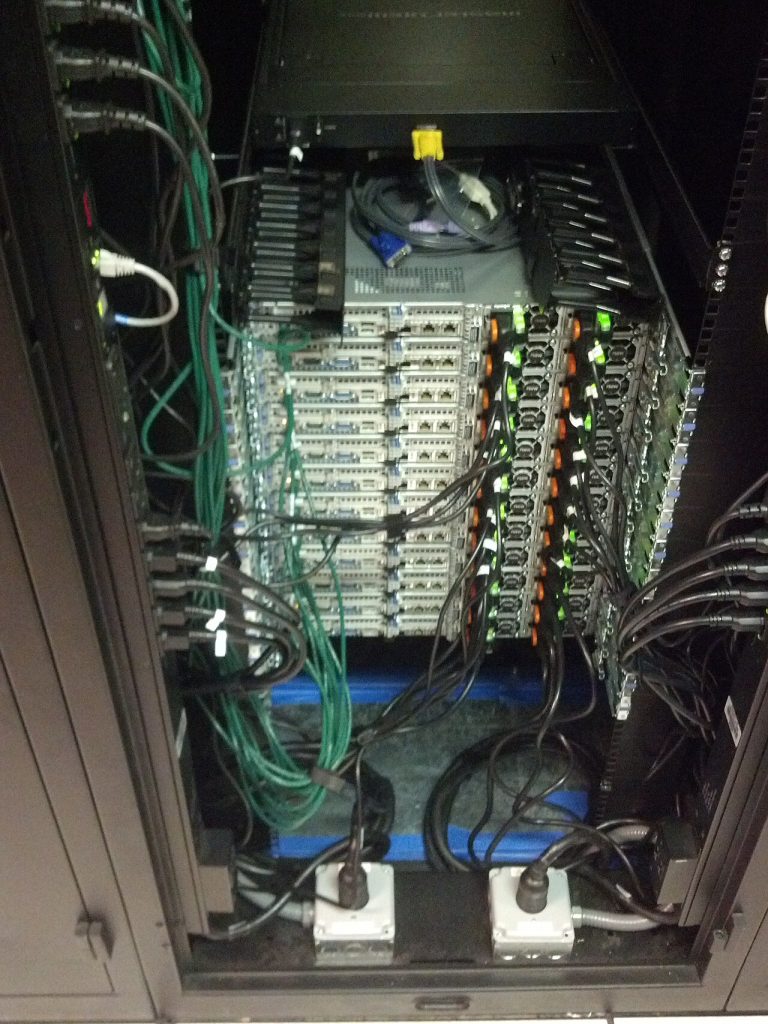
A modern language model is built by running enormous amounts of calculation across thousands of specialised chips for weeks or months. The chips are expensive, they are in demand, and they must be connected by fast networking and housed in buildings that supply a great deal of electricity and cooling.
Labs either buy that hardware or rent it from cloud providers. Either way, the cost scales with ambition. A bigger model trained on more data generally needs more computation, and each new generation tends to be larger than the last.
Crucially, one reason AI labs need so much funding is that much of this spending happens before a product exists. A lab can pay for a training run, find that the result disappoints and have little to show except lessons. Funding rounds are partly a way of paying for experiments that might not work.
Running the thing costs money too
Training gets the headlines, but serving users is a continuing expense. Each question a person asks requires computation, and popular products handle vast numbers of requests. Unlike traditional software, where an extra user costs almost nothing, an AI service has a real marginal cost per conversation.
That changes the economics, and it is another reason AI labs need so much funding. A company can grow quickly and still lose money on each customer if usage is heavy and pricing is low. Subscriptions, business contracts and developer access fees all try to close the gap, and companies have worked to make models cheaper to run, but the balance is hard to strike.
People and data matter, but compute dominates
Researchers and engineers are well paid, and competition for experienced talent is intense. Data also costs money, whether it comes from licensing deals, human reviewers who rate and improve responses, or specially prepared datasets.
Still, for the largest labs these costs tend to sit behind hardware and infrastructure. Because AI labs need so much funding for hardware, partnerships between labs and big cloud companies are common: a lab gets access to computing capacity, and the cloud provider gets a major customer and a stake in a promising technology. Details of such deals vary and are often only partly public, so be careful about treating any rumoured figure as fact.
AI labs need so much funding: what investors are betting on
Investors who write large cheques are not buying a finished business. They are betting on several things.
One is that models will keep improving in ways that make them far more useful, opening up large markets in software, customer service, research and creative work.
Another is that a few players will dominate. If the cost of competing is so high that only a handful can afford it, those who stay in the race might capture lasting advantages.
A third is strategic. Large technology firms and other corporations may invest to secure early access, avoid being disrupted or tie a lab to their platform.
Those motives explain why AI labs need so much funding even when profits are distant. They do not guarantee that the bets pay off.
One more point is easy to miss. Because so much of the spending flows to chip makers, cloud providers and power suppliers, a funding round in one company can be revenue for several others. That circular quality is part of why the sector moves in waves and why headline totals can overstate how much fresh money is truly new.
Reasons for caution
A few concerns are worth keeping in mind.
Progress is not guaranteed to continue at the same pace. If the returns from simply scaling up shrink, the expensive approach loses some of its logic.
Competition can erode pricing. If several labs offer similar abilities and open models become strong enough, customers may not pay a premium.
Infrastructure has limits. Chips, power and suitable sites for data centers can be bottlenecks, and local communities increasingly ask about electricity, water and land use.
Financial structure matters. A company that has promised large future payments for computing needs revenue to grow quickly enough to meet them.
None of this means the sector will fail. It means that big funding rounds should be read as signs of cost and confidence, not proof of success.
When you see another large raise, ask a few simple questions. How much of it is likely to go to computing capacity? Is part of it money that returns to a cloud partner as spending? What does the company actually sell, and who pays for it? And is the amount reported by the company or merely rumoured?
Related reading on this site: Why Random Chat Sites Keep Getting Shut Down, and What Comes Next and Why Big Apps Tear Down and Rebuild Their Android Code, and What You Notice. For general background on ai labs need so much funding, see the Wikipedia article on artificial general intelligence.
Those questions turn the puzzle of why AI labs need so much funding into something you can reason about. The sums are huge because the machines are, and the real test is whether the products built on them become useful enough, and cheap enough to run, to justify the bill.