

Listen to a short audiobook sample and try to guess whether a person recorded it. A few years ago the answer would have been obvious within a sentence, thanks to flat rhythm and odd emphasis. Today, you may honestly not be sure. That change came from a shift in how computers produce speech, known as AI voice synthesis, and it has pulled voice technology out of accessibility tools and into publishing, games, film and customer service.
From stitched clips to learned speech
Early text-to-speech systems worked by joining recorded fragments of speech, or by using rules to generate robotic sounds. They were intelligible, but monotone. Modern AI voice synthesis uses neural networks trained on large amounts of recorded speech paired with transcripts. The model learns not just how to pronounce words but patterns of pace, pitch and emphasis, the elements that make speech sound like someone meaning something.
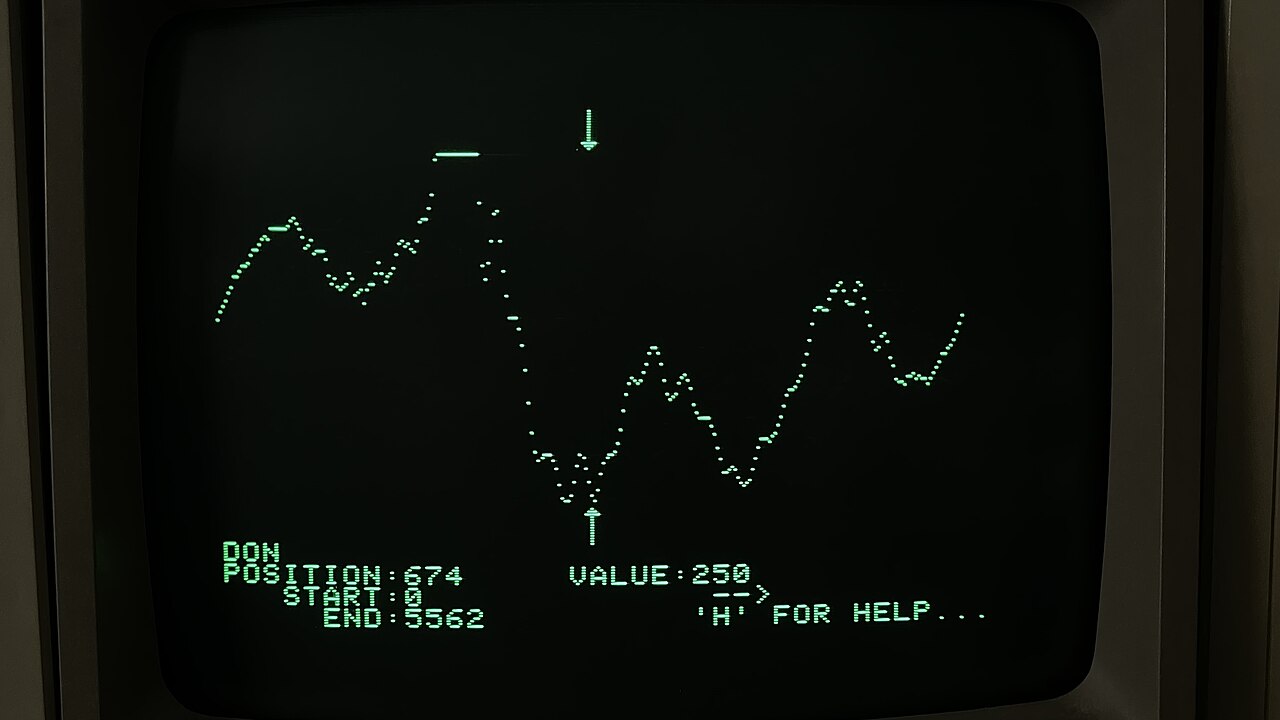
In outline, the process has two stages. First, the text is analyzed: numbers are expanded, abbreviations are interpreted, and the system predicts how the sentence should be spoken. Second, a model generates the audio signal itself, often as a spectrogram that another network converts into a waveform. Newer approaches blur these stages and generate sound more directly, which helps them capture breathing, hesitation and tone.
Speed matters as much as quality when a voice has to hold a conversation. If a reply arrives a second too late, even a perfect voice feels artificial, a point explored in why voice AI latency matters more than you think. Engineers therefore trade a little polish for faster output in live settings such as phone assistants, while taking more time over audiobooks, where nobody is waiting.
Cloning a voice with AI voice synthesis
Voice cloning narrows the system to a particular person. With a sample of their speech, ranging from a few seconds to several hours depending on the method, a model can be adapted to reproduce that voice, reading any text. More data generally yields a more faithful and flexible result, including emotion that shifts with the content.
This is useful in fairly mundane ways. A person who is losing their ability to speak because of illness can preserve their voice. A podcaster can fix a flubbed word without rebooking a studio. A game studio can generate placeholder dialogue while writers revise the script.
Where companies use AI voice synthesis
- Audiobooks and narration. Publishers can produce titles that would never justify the cost of a studio recording.
- Dubbing and localization. Translating speech while keeping the speaker’s voice character across languages.
- Games and animation. Dynamic dialogue and background characters.
- Accessibility. Screen readers and reading aids that sound less tiring over long periods.
- Customer service and assistants. Phone systems and apps that sound less robotic.
The consent problem
The same technology that restores a voice can also imitate someone who never agreed. Fraudsters have used cloned voices in phone scams, claiming to be a relative in trouble. Actors and narrators worry about being replaced by models trained on their work. Public figures can be made to appear to say things they never said.
Responsible providers of AI voice synthesis address this in several ways: requiring proof that you have the right to clone a voice, blocking famous voices, watermarking generated audio so detectors can identify it, and offering ways for people to opt out. None of those is perfect. The legal framework is also still forming, with questions about whether a voice is protected like a likeness, and how contracts with performers should handle the future use of their recordings.
Business deals are shaping the answer. Agreements in which a company licenses someone’s work or hires their team without buying the whole firm are becoming common in AI, as described in this explainer on acqui-hire and licensing deals. Performers should expect similar structures for voices, and should insist on knowing how long a license lasts and what it covers. Read more about the underlying technology in the general article on speech synthesis.
How to protect yourself
- Agree on a family code word to use when someone calls asking for urgent money.
- Hang up and call back on a number you already know.
- Be careful about posting long, clean recordings of your voice publicly if you don’t have to.
- If you’re a performer, read contracts for clauses about AI training and synthetic reproduction before you sign.
Judging quality
If you’re evaluating a voice tool for a project, test it on your actual content, not the demo. Include names, technical terms, numbers and emotional passages, which are where weaknesses show. Listen on headphones and on a phone speaker. Check whether you can control pacing and emphasis, and whether the licensing terms cover commercial use.
Where AI voice synthesis leaves us
Synthetic speech from AI voice synthesis will keep improving until the question of whether it sounds human stops being interesting. The more important questions concern permission, payment and disclosure. A world where a voice is a license-able asset needs clear rules about who owns it. Listeners will probably end up caring less about whether a voice is artificial than about whether someone was honest about it.
Image: Marie-Lan Nguyen / Wikimedia Commons, CC BY 2.5.



