A modern data center doesn’t sleep. Servers run through the night, cooling systems hum, and any interruption in power can ripple across thousands of customers. As computing demand grows, especially from AI workloads, the companies running these facilities are searching for electricity that is clean, steady and available where they build. Small modular reactors are one answer on the table.
That search is why small modular reactors keep appearing in conversations that used to belong to utilities and energy ministries.
What makes small modular reactors different
Traditional nuclear plants are enormous projects, each one designed and built largely on site over many years. A small modular reactor, or SMR, aims to change the approach. The units are smaller in output, and many of their components are meant to be fabricated in a factory and shipped to the site. The theory is that repeated production brings costs down and shortens construction, the way it has for other manufactured goods.
Several designs exist. Some are scaled-down versions of conventional water-cooled reactors. Others use different coolants such as molten salt, liquid metal or gas, and promise features like operating at lower pressure. They are at different stages, and not all will reach commercial use.
Why data centers fit small modular reactors
The match is easy to see. Data centers need constant power, which wind and solar can’t provide on their own without storage. Nuclear plants produce electricity continuously with very low carbon emissions during operation. A reactor built near a facility, or supplying the grid it draws from, could give a reliable carbon-free source.
Companies also like long-term contracts. Agreeing to buy power from a project for many years can give developers the financial certainty they need to build, which is often the biggest hurdle for new energy infrastructure.
The hard parts
Enthusiasm for small modular reactors shouldn’t hide the obstacles. A few of the big ones:
- Licensing: regulators must review each design thoroughly, which takes time, and novel designs raise fresh questions.
- Cost: the promise of factory-built savings depends on building many units. First-of-a-kind projects frequently cost more and take longer than hoped.
- Fuel: some advanced designs need fuel enriched at higher levels than today’s plants use, and supply chains for it are still developing.
- Waste: used fuel storage and long-term disposal remain a political and technical question in many countries.
- Public acceptance: communities near proposed sites need clear information and a say in decisions.
Timelines matter as well. Many projects talk about operating at the end of this decade or in the early 2030s. Past experience in the industry suggests schedules can slip, so it’s wise to treat announced dates as aims, not guarantees.
Fuel and supply chains deserve a closer look. Many advanced designs plan to use fuel enriched to a higher level than most existing plants, and the capacity to produce it at scale is limited today. A company can sign a contract for a reactor long before a reliable fuel supply exists. When you read about small modular reactors, check whether the fuel plan is described, because it is one of the less glamorous but more decisive pieces.
Then there is how the power is used. A reactor beside a data center could supply it directly, but connecting to the grid is usually more practical, since the facility still needs backup and the plant needs a customer when the data center is idle. Contracts tend to be structured around the grid, even when the headline says a company is powering its servers with nuclear.
Money matters as much as engineering. Investors look closely at who carries cost overruns, a theme explored in why nuclear startups can raise money fast and build slowly. And low-carbon electricity is only part of a company’s climate picture, as shrinking the carbon cost of everyday purchases shows at the consumer level: look at what moves the needle most.
Why former coal sites suit small modular reactors
Retiring fossil fuel plants offer attractive locations for new nuclear projects. They already have grid connections, cooling water access, skilled workers and local familiarity with power generation. Reusing such a site can reduce permitting complexity and keep jobs in communities that depended on the old plant.
It doesn’t remove the need for a full safety review, and each location has its own geology, water and environmental issues.
How to read an announcement
When a company declares support for new nuclear, ask a few practical questions. Is it a funding commitment, a power purchase agreement or an early study? Which design is involved, and has it been approved by the relevant regulator? Who bears the cost if the project runs over budget? Is the electricity meant for the company’s own use or for the wider grid?
The answers separate real construction from aspiration for small modular reactors. For the technology itself, the next several years will be the test. If a handful of projects finish on time and at a reasonable price, confidence will rise sharply. If not, the idea may stay stuck at the drawing board. Either way, the demand that drew attention to it isn’t going away.
Keep an eye on a few concrete milestones: regulatory approvals for specific designs, first concrete poured at a site, fuel supply agreements, and signed power contracts with named prices. Each is harder to fake than a press release. Progress through those steps would signal that a project is real. Absence of them for years is worth noticing too. In an industry measured in decades, patience and skepticism are both reasonable.
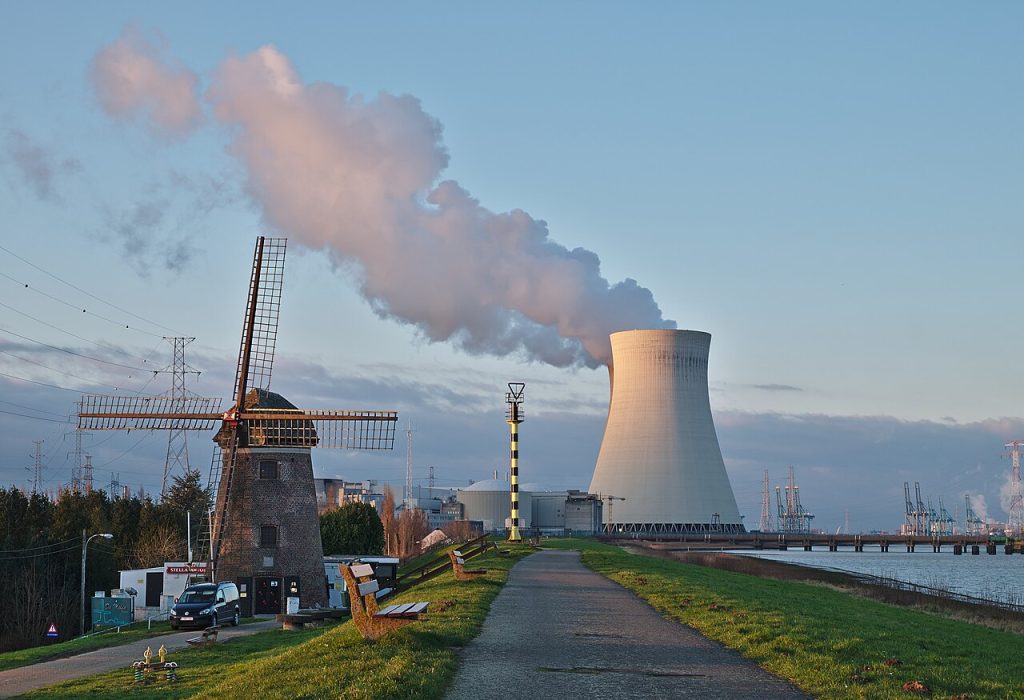
Image: Trougnouf / Wikimedia Commons, CC BY 4.0.