The emir of Qatar is one of the most closely discussed figures in global finance, so sheikh tamim bin hamad al thani networth is a frequent search. There is no audited, public figure. Royal wealth in Gulf monarchies is hard to separate from state assets, and any number you see is an outside estimate.
Table of Contents
Who he is
Sheikh Tamim bin Hamad Al Thani has been the Emir of Qatar since June 2013, when his father, Sheikh Hamad bin Khalifa Al Thani, abdicated in his favor. Qatar is a small, gas-rich country with one of the world’s highest incomes per person. Its wealth rests largely on natural gas, and the country has used the proceeds to build a large sovereign wealth fund and invest around the world.
The problem with measuring royal wealth
For a head of state in an absolute monarchy, the line between personal wealth and state wealth is not drawn in public documents. Qatar does not publish a personal financial disclosure for the emir. Some outlets and wealth trackers have offered estimates of the Al Thani family’s wealth that run into the tens or hundreds of billions of dollars, while estimates for Sheikh Tamim personally have been much lower. These figures differ enormously and I cannot verify any of them.
Sovereign funds are not personal fortunes
A common mistake is to attribute the holdings of the Qatar Investment Authority to the emir personally. The QIA is the state’s sovereign wealth fund, set up to invest the country’s surplus on behalf of the state. It has stakes in companies and property across the world, and it is among the largest funds of its kind, with assets commonly reported in the hundreds of billions of dollars. Those assets belong to the state of Qatar, not to any one person. Confusing the two inflates personal estimates enormously.
What belongs to the family
The ruling family does have private investments, property and businesses. Some are visible, such as large holdings in London real estate and stakes in companies, but the structure is complex and often held through investment vehicles. Public information is partial at best.
How sheikh tamim bin hamad al thani networth estimates are built
- Family wealth guesses, divided by assumed shares among relatives.
- Identified private holdings, which journalists have traced through filings.
- Assumed salary or allowances, which are not published.
- Extrapolation from comparable royals, which is the weakest method.
Because the underlying data is thin, two reputable-looking pages can differ by orders of magnitude. If a page gives a single figure with no method, treat it as a guess.
Gas, sovereign wealth and the shape of the Qatari economy
Qatar sits on one of the world’s largest natural gas fields, shared with Iran, and exports liquefied natural gas to many countries. Gas revenue flows to the state, and part of it is invested through the QIA. The state also spent heavily ahead of hosting the 2022 FIFA World Cup, building stadiums and infrastructure. All of that is state spending and investment, and none of it can be added to an individual’s tally. If you keep that distinction in mind, you will find that most large figures attached to the emir’s name collapse once you ask which pocket they came from.
This is also why journalists writing about royals use phrases like “the family is estimated to control” or “the state invests”, and avoid saying “he owns”. The words are chosen with care because the underlying legal ownership is different.
Why it matters how you phrase it
If you are writing about the topic, a careful phrasing would be: “The emir’s personal fortune is not publicly documented; outside estimates vary widely, and Qatar’s sovereign wealth fund belongs to the state.” That sentence is accurate and avoids making a claim you cannot support. Our guide on understanding wealth rankings explains why lists of the richest people often leave out royals, and our overview of how to calculate net worth shows why hidden assets make estimates unreliable.
Why Forbes and Bloomberg handle royals differently
Forbes publishes a list of the world’s billionaires but has historically excluded or treated separately royal families whose wealth is entangled with national assets. In some years it has published separate lists of royals. Bloomberg’s index focuses on people whose wealth it can track from company holdings. The result is that many royals do not appear on standard billionaire rankings, which in itself is a sign of how little can be verified.
What can be verified
His title, the date he took office and Qatar’s economic data are documented. Qatar’s gas exports, the existence of the QIA and its major investments are public. You can read about them on his Wikipedia page and on the QIA’s own site.
To sum up, sheikh tamim bin hamad al thani networth is unknown in any reliable sense. Estimates vary from billions to far more depending on whether family and state assets are mixed together, and the sensible approach is to avoid quoting a single figure. This article is informational and is not financial advice.
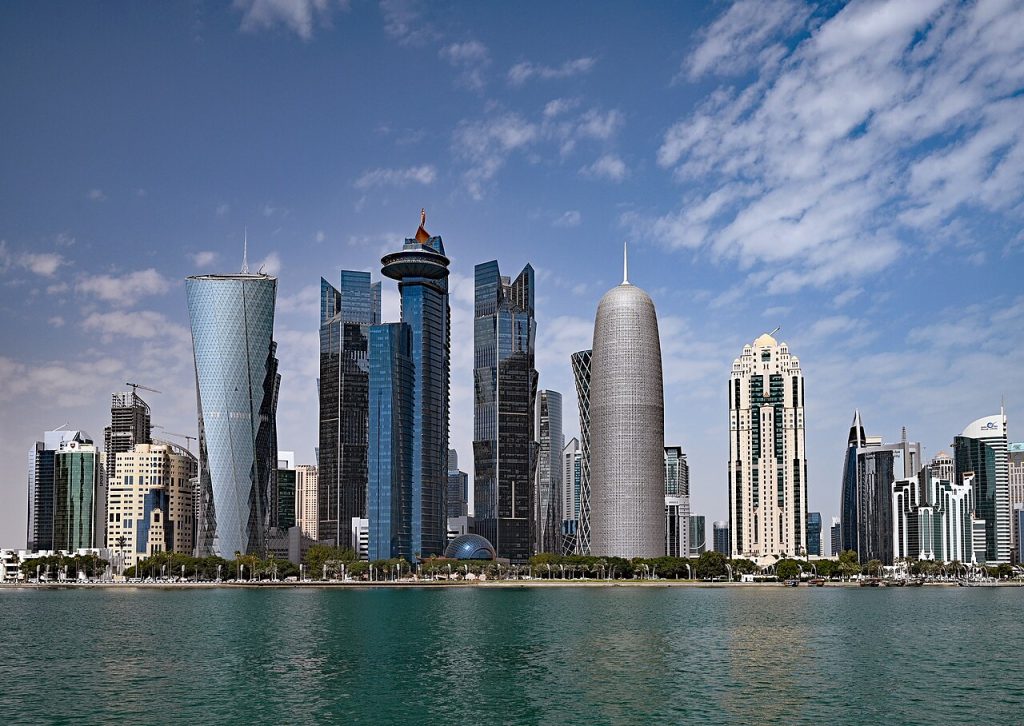
Featured image: Doha – West Bay Skyline 04.jpg by P. Hughes, CC BY 4.0, via Wikimedia Commons.