People often ask what is the networth of the Roman Catholic Church expecting a headline number in the billions or trillions. The truthful answer is that there isn’t one. The Church isn’t a single company with one balance sheet, and no authoritative source has ever totaled everything its parts own. Figures you see online are usually guesses, comparisons or numbers for one part of the whole.
Understanding why helps you spot bad claims, so here’s how the Church is actually organized financially.
Why no single total exists
The Roman Catholic Church is a global institution of roughly 1.4 billion members, but its legal and financial structure is highly decentralized. Assets are owned by many separate entities, each with its own accounts under local law. Let’s look at the main layers.
The Holy See and Vatican City State
The Holy See is the central governing body, and Vatican City State is a separate small sovereign territory. Their budgets cover things like the Roman Curia, the Vatican Museums, diplomatic missions and media. In recent years the Vatican has published more financial information than in the past, including consolidated figures for the Holy See, as part of transparency reforms under Pope Francis. Those reports have generally shown operating deficits, not huge profits, but I won’t quote specific amounts since they change each year. You can find the latest on the Vatican’s official site.
The Institute for the Works of Religion
Often called the Vatican Bank, this institution manages assets for religious orders, Church institutions and clergy. It publishes annual reports. Assets under management are not the same as the Church’s net worth, since they belong to clients.
Dioceses and parishes
Each diocese is generally a separate legal entity. In the United States, dioceses and parishes hold property, schools, hospitals and investments independently, and they’re accountable to their own boards and local laws. A diocese in one country doesn’t own or answer for another’s assets.
Religious orders and charities
Orders such as the Jesuits or Franciscans, plus Catholic charities, hospitals, universities and aid groups, own property and run budgets of their own. Many of these hold assets that exist to serve a mission, such as a school building, not to be sold.
Why headline numbers are misleading
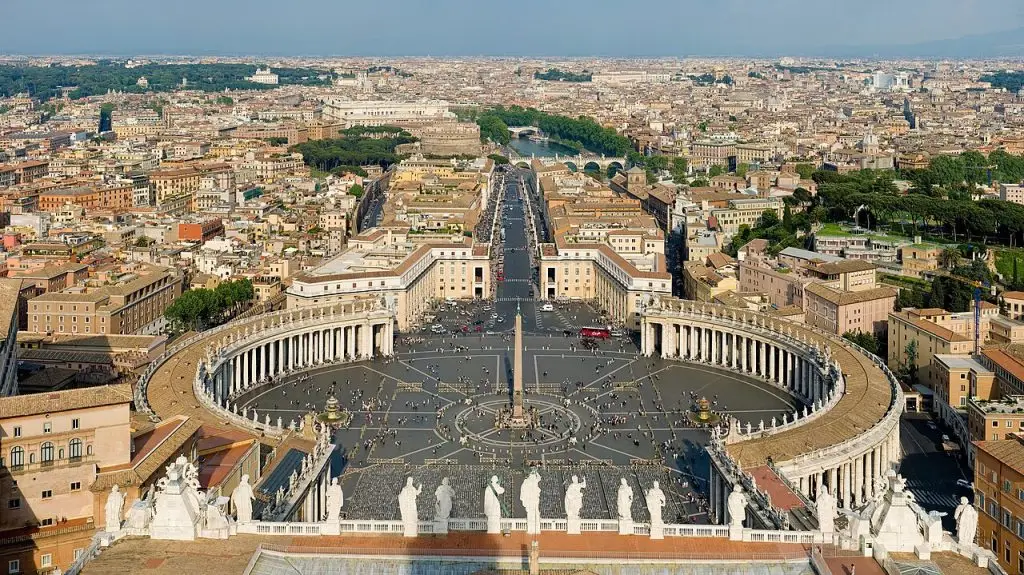
- Priceless assets. How do you value St Peter’s Basilica, or the Vatican Museums’ art collection? Items that can’t realistically be sold aren’t wealth in a normal sense.
- Double counting. Adding up the Vatican, dioceses, orders and charities risks counting the same hospital or fund more than once or mixing client money with Church assets.
- Liabilities are ignored. Net worth means assets minus debts, and the Church also has obligations, including pension shortfalls and, in some countries, legal settlements related to abuse cases.
- Different accounting rules. Each country and entity uses its own standards.
What can be said responsibly
- The Church owns a vast amount of property worldwide, including churches, schools, hospitals and land.
- Much of it is held for religious and charitable use and isn’t liquid.
- The Vatican’s central finances are smaller than many assume and have faced deficits.
- Local church finances are separate and vary enormously, from wealthy dioceses to struggling parishes.
Where claims come from
Viral claims often compare the Church to corporations like Apple, or throw out a trillion-dollar figure. Those typically come from adding up all property at assumed market values, with no source or method. If you see such a claim, ask who computed it and how. Historians and journalists who study Vatican finance generally agree that no complete tally exists.
Where to find reliable data
- The Vatican’s published budgets and annual reports.
- Annual reports from individual dioceses, many of which are posted online.
- Investigative reporting from established outlets, though these cover specific cases.
Bottom line: what is the networth of the Roman Catholic Church?
When someone asks what is the networth of the Roman Catholic Church, the clearest reply is that it’s many institutions, not one, and that no credible combined figure exists. Look at the specific entity you care about, such as the Holy See or a local diocese, and read its own financial statements.
People who type what is the networth of the roman catholic church into a search engine are usually after a dramatic comparison. A more useful question is which part of the Church you mean and whether its accounts are published. The answer changes the conversation from rumor to records.
This article is general information, not financial advice.
Related reading: What Is the Networth of the Catholic Church? Why No One Knows.
Source for current figures and rankings: Forbes.