
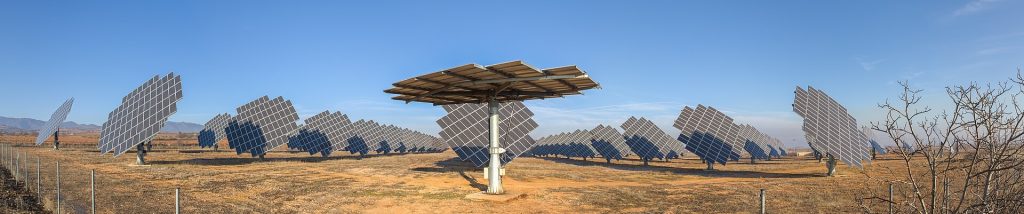
Most venture funds boast about how many companies they back. A new $250 million climate fund led by a former Meta chief technology officer is trying something different: it wants to back fewer ideas, and only ones that could eventually reach enormous scale. The pitch is summed up in the name of the firm, Gigascale Capital, a nod to the gigaton, the unit climate scientists use when they talk about meaningful cuts in global emissions.
What “gigascale” means
A gigaton is a billion tonnes of carbon dioxide. Global emissions run in the tens of gigatons each year, so a technology that removes or avoids even one gigaton annually is working at a size that can change the numbers. Many clean-tech startups succeed commercially while staying tiny relative to that goal: a better filter for one factory, an app for home energy tracking, a niche battery chemistry. Those are useful, but they do not move the global total. A gigascale lens screens for companies that could plausibly grow by orders of magnitude.
Why the pitch stands out now
Climate investing has been through a rough few years. The early-2020s enthusiasm gave way to higher interest rates, project delays and political swings, and several well-known startups struggled to turn demos into profitable factories. Investors who once wrote checks for any green label became pickier. Against that backdrop, a fund explicitly built around scale reads as a correction: less hype about being sustainable, more attention to whether a business can actually grow.
What a technology investor brings
A founder with experience running engineering at a very large software company brings a particular way of looking at problems. Software people think about fixed costs, marginal costs and the speed of iteration. They tend to ask how quickly a product can improve, whether it benefits from data and whether distribution is cheap. Applying that lens to hardware-heavy climate industries is both a strength and a risk. Software scales quickly with little capital, while power plants, batteries and materials need factories, permits and years of testing.
Where such a fund might look
- Grid and storage. Technologies that help electricity systems handle large amounts of wind and solar.
- Industrial heat and materials. Steel, cement and chemicals are huge sources of emissions that are difficult to clean up.
- Transportation. Freight, shipping and aviation, where batteries alone are not enough.
- Food and land use. Methods to reduce methane and fertilizer emissions at farm scale.
- Carbon removal. Approaches that take carbon dioxide out of the air or oceans and store it for the long term.
The fund’s specific portfolio is for the managers to announce, so treat this list as the usual territory of climate investors rather than a set of confirmed investments.
The “zigging when others zag” argument
Contrarian timing is the heart of the story. When many investors retreat, prices for promising companies often fall, and a well-capitalized fund can pick up stakes on better terms. The danger is that cheap valuations can reflect real problems, such as technology that does not work or customers who will not pay a premium for green products. A fund needs patience, technical diligence and a willingness to say no to charismatic pitches.
Challenges that remain
- Time. Energy and materials businesses take a decade to mature, longer than the typical life of a venture fund.
- Capital intensity. A first factory can cost far more than a startup can raise in early rounds, so follow-on financing from banks, governments or strategic partners is crucial.
- Policy risk. Subsidies and regulations can change after an election, altering the economics overnight.
- Customer demand. Buyers often choose the cheapest option, and green products must compete on price.
What founders should take from it
If you are building a climate company, expect more questions about scale. Be ready to explain the size of the addressable market in tonnes of emissions, not only dollars, and how your unit costs fall as you grow. Show a path to your first factory or first large customer. Investors in this space increasingly want evidence that the technology works outside the lab, and a plan for financing the hard middle stage between pilot and mass production.
The takeaway
A single fund will not fix emissions, but its focus tells us something about where capital is trying to go. Instead of a thousand small experiments, there is renewed appetite for a handful of large, difficult bets. If those bets work, the payoff could be both financial and environmental. If they do not, the lesson will be the old one: building physical things at scale is slow, and patience is part of the strategy.



