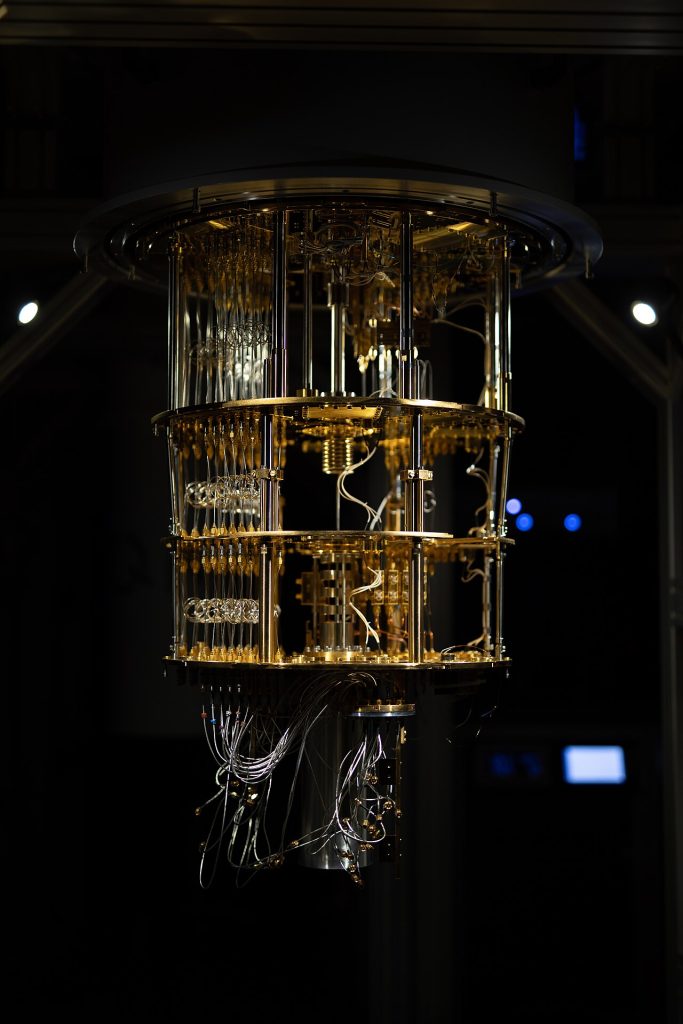
Governments around the world have announced national quantum programmes, and startups in countries with no tradition in the field are being chosen as flagship efforts. The headlines sound dramatic. To judge them, it helps to know what a quantum computer is, what it might do, and how far the technology has to go.
Bits and qubits
A normal computer stores information as bits, each either 0 or 1. A quantum computer uses qubits. A qubit can be in a combination of states, described by probabilities, until it is measured. When qubits are linked through a property called entanglement, their states are correlated in ways that have no everyday equivalent.
This does not mean a quantum computer tries every answer at once. Algorithms are designed so that wrong answers cancel and right ones reinforce, which only works for particular kinds of problems.
What they might be good at
Researchers expect usefulness in a few areas.
- Simulating molecules and materials. Chemistry is governed by quantum rules, so quantum machines could model reactions for drugs, batteries, and fertilisers more accurately.
- Optimisation. Some scheduling and logistics problems might see speed-ups, though evidence is mixed.
- Cryptography. A large, error-corrected quantum computer could break some current encryption methods, which is why standards bodies are developing quantum-resistant alternatives.
- Sensing and measurement. Quantum sensors can detect tiny changes in magnetic fields or time.
For everyday tasks like browsing or word processing, quantum computers offer no advantage.
Why it is hard to build
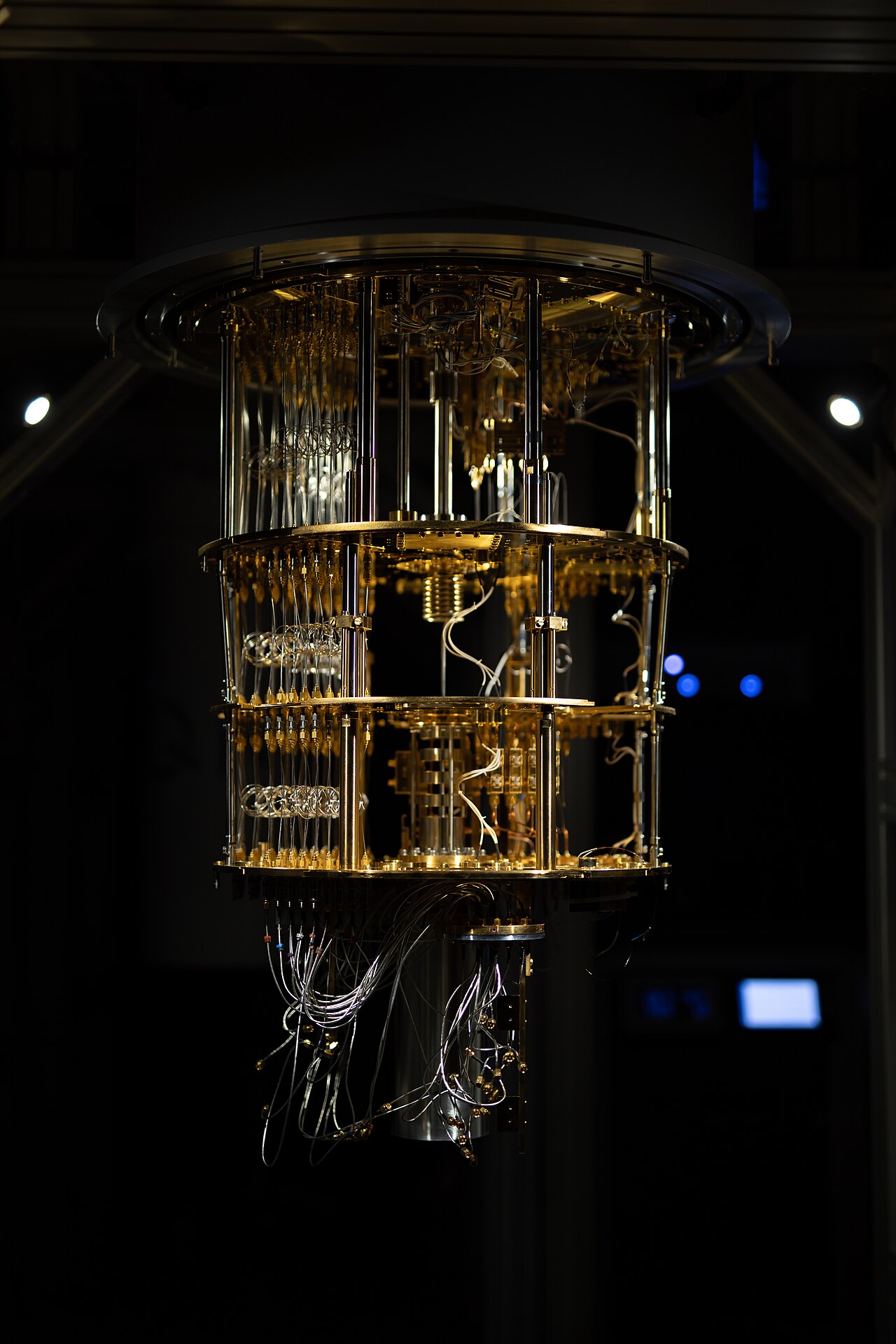
Qubits are fragile. Heat, vibration, and stray electromagnetic noise cause errors. Many designs need to be cooled to temperatures close to absolute zero. Others use trapped ions, photons, or neutral atoms, each with strengths and trade-offs.
Today’s machines have tens to a few thousand physical qubits, but useful applications are expected to need many more, plus error correction that combines many physical qubits into one reliable logical qubit. This is an enormous engineering challenge. Timelines are uncertain, and claims of near-term breakthroughs should be read cautiously.
Why governments invest
- Strategic security. Countries want to avoid dependence on others for a technology that may affect cryptography and defence.
- Scientific leadership. Quantum research attracts talent and spin-offs.
- Industrial opportunity. Supply chains need components such as lasers, cryogenics, and control electronics.
- Skills. Funding builds universities and training programmes.
- Regional development. A flagship company can anchor a new tech cluster.
Programmes typically combine research grants, public-private partnerships, and procurement of early machines for national labs.
Reading company claims
When a firm announces a milestone, ask:
1. How many qubits, and of what quality? Error rates matter more than raw numbers. 2. What task did it perform, and is it useful beyond a demonstration? 3. Was the result independently verified? 4. How does it compare with the best classical computers on the same task? 5. What is the roadmap for error correction?
Marketing sometimes blurs these points.
What should businesses do now
Most companies do not need to buy a quantum computer. Sensible steps include:
- Learning the basics so you can evaluate vendors.
- Running small pilots through cloud access, if your field might benefit.
- Planning for post-quantum cryptography by inventorying systems that use public-key encryption and following guidance from standards bodies.
- Watching for developments rather than rushing in.
What to expect
Progress is steady but gradual. Specialised quantum advantages for narrow problems may appear before general-purpose machines. Hybrid approaches, where classical and quantum processors cooperate, are likely.
Bottom line
Quantum computing uses qubits to solve certain problems in ways classical machines cannot easily match, but the hardware is delicate and far from mature. National programmes aim to build skills, security, and industry. Treat bold timelines with care, ask for evidence behind claims, and prepare practically by updating encryption plans.
Glossary for beginners
Superposition describes a qubit holding a blend of states until measured. Entanglement links qubits so their results are correlated. Decoherence is the loss of quantum behaviour caused by noise. Error correction groups many physical qubits into one dependable logical qubit. Knowing these four terms lets you read most announcements without getting lost, and helps you spot claims that skip the difficult parts. Reliable explainers from universities and national labs are a good place to deepen your understanding at your own pace.
Where to follow progress
Look for peer-reviewed papers, roadmaps published by hardware makers, and reports from national research agencies. Compare year-over-year changes in error rates and the number of logical qubits, which tell you far more than headline qubit counts.
Further reading
Related on this site: Orbital Tugs and Moon Water: How Space Logistics Could Work and AI and Virtual Production for Indie Filmmakers: What Is Realistic. For general background, see the Wikipedia overview.