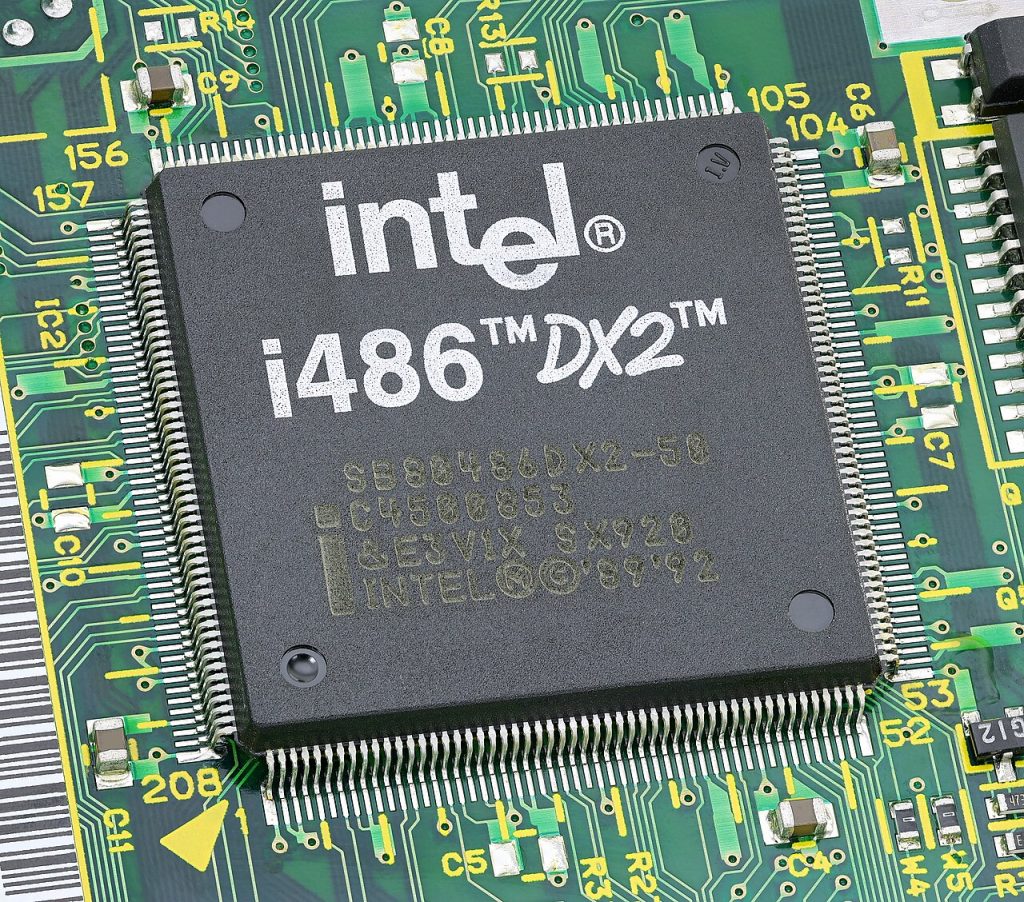
Every wave of computing has its hardware moment. For artificial intelligence, the moment is now: training and running large models requires enormous numbers of specialised chips, and the companies that supply them have become some of the most valuable in the world. It is no surprise that new startups, often led by veteran engineers, are trying to design their own AI hardware and are being offered billion-dollar valuations before shipping a product. Understanding why, and what can go wrong, helps you read funding news with a clearer head.
Why AI needs special chips
Neural networks perform huge numbers of simple multiplications and additions. General-purpose processors can do this, but they are not efficient at it. Graphics processors became the standard because they handle many calculations in parallel. Newer designs go further, with circuits built specifically for matrix maths and with memory arranged to reduce the time spent moving data, which is often the real bottleneck.
Better chips can mean lower energy use, faster responses, or lower cost per task. For companies running models at scale, even small gains translate into large savings.
The case for a new entrant
Several arguments appeal to investors.
- Dependence on one supplier. Customers dislike relying on a single vendor for something critical, and they will test alternatives.
- Different workloads. Running a trained model for users, called inference, has different needs from training. A chip specialised for it could be cheaper.
- New designs. Ideas such as huge single-wafer chips, memory placed close to compute, or lower-precision arithmetic promise leaps in efficiency.
- Edge devices. Phones, cars, and sensors need compact, low-power AI chips.
If a startup can win even a small share of a giant market, the payoff would be large.
Why chip startups are hard
The challenges are well documented.
1. Cost and time. Designing a modern chip takes years and tens or hundreds of millions of dollars before the first sample, and a mistake can mean a costly respin. 2. Manufacturing access. Advanced production capacity is limited and controlled by a few foundries. A small customer may wait in line. 3. Software. A chip is only useful if developers can program it easily. The leading vendors have mature software stacks built over many years. Competing on software is often harder than on silicon. 4. Customer inertia. Companies with working systems hesitate to switch unless the benefit is large and proven. 5. Moving target. Model designs change quickly. A chip tuned for last year’s architecture may not fit next year’s. 6. Supply chain and policy. Export rules and trade tensions can limit where chips are made and sold.
Reading funding news
A large valuation says that investors believe in the team and the market, not that the chip works. Look for evidence beyond the round size.
- Has the company taped out a chip, and does it run real models?
- Are there named customers or pilots, and for what workloads?
- How does performance compare in published benchmarks that reflect actual use?
- What is the software story and the developer experience?
- Who is manufacturing the chip, and what capacity is secured?
Press about “sources say” talks of valuations should be taken as reports, not facts, until the company confirms them.
Why the stakes are high for everyone
Hardware limits shape what AI can do and who can afford it. If new designs lower the cost of running models, services could become cheaper and more widely available. If the supply remains concentrated, prices stay high and smaller firms struggle. Energy use is another factor: data centres draw heavy power, and more efficient chips help reduce the strain.
What buyers should do
If your company is considering non-standard hardware, run a pilot with your own models. Measure speed, cost, and the effort to port your code. Plan for support and for the possibility that a startup may be acquired or fail. Keep the option to run on mainstream hardware as a fallback.
What individuals can watch
Look for signs of real adoption: partnerships with cloud providers, production volumes, and developer communities. Ignore claims of “ten times faster” unless they specify the comparison and the task.
Bottom line
AI hardware startups attract investors because the market is vast and dominated by few suppliers. The path from design to meaningful sales is long, expensive, and dependent on software and manufacturing. Treat valuations as signals of ambition, and look for working silicon, real customers, and a credible software plan.
Further reading
Related on this site: Chrome OS in Hindsight: What the First Cloud Laptops Got Right and Buying a Tablet With a Built-In Voice Assistant: A Checklist. For general background, see the Wikipedia overview.